
Diabetic Retinopathy
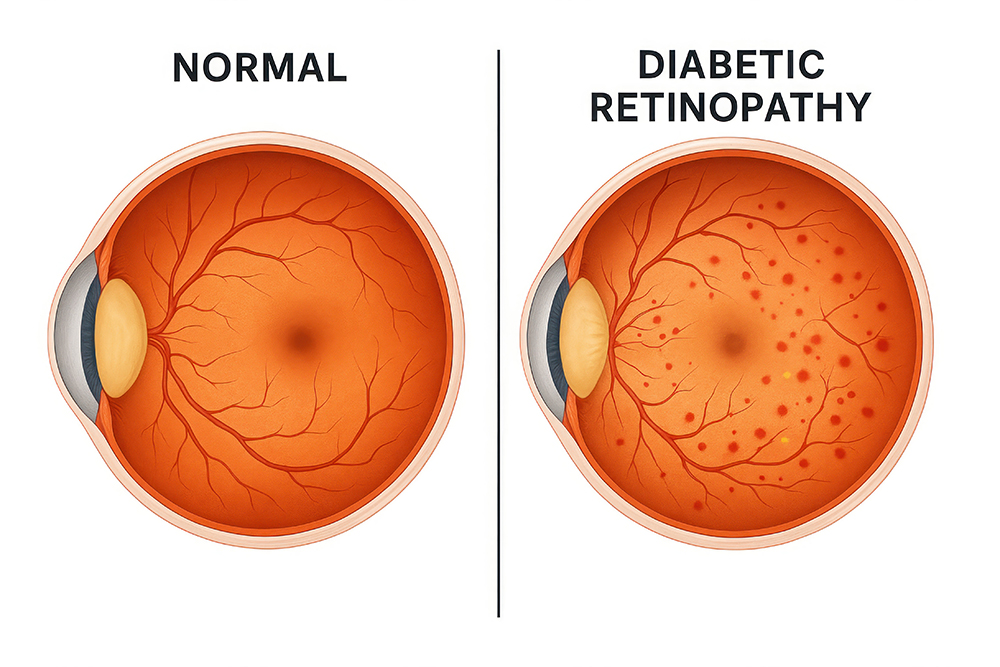
Understanding Diabetic Retinopathy: A Leading Cause of Vision Loss
Diabetic retinopathy is a serious eye condition that affects individuals with diabetes. It occurs when high blood sugar levels damage the tiny blood vessels in the retina—the light-sensitive tissue at the back of the eye responsible for vision. Over time, this damage can lead to vision impairment or even blindness if left untreated. Diabetic retinopathy is one of the leading causes of vision loss among working-age adults in the United States.
Signs and Symptoms
In the early stages, diabetic retinopathy may not cause noticeable symptoms. As the disease progresses, symptoms can include:
- Blurred or fluctuating vision
- Dark spots or floaters
- Difficulty seeing at night
- Impaired color vision
- Areas of vision loss
Because symptoms often appear only after significant damage has occurred, regular eye exams are critical for early detection and management. Don’t wait for symptoms to appear—schedule an appointment with the experienced team at Eye Associates of Plantation today and take a proactive step in protecting your vision.
Diagnosis
Diabetic retinopathy is diagnosed through a comprehensive dilated eye exam. During this exam, your ophthalmologist will evaluate the health of your retina using advanced diagnostic tools, such as:
to capture detailed images of the retina
to assess retinal thickness and detect fluid buildup
to examine blood vessel leakage or abnormal growth
These imaging technologies help determine the severity of the disease and guide appropriate treatment.
Treatment Options
While diabetic retinopathy cannot be completely reversed, timely treatment can help preserve vision and slow the progression of the disease. Options may include:
- Intravitreal Injections: Medications such as anti-VEGF agents (e.g., Avastin®, Eylea®, or Lucentis®) are injected into the eye to reduce swelling, slow vessel growth, and stabilize vision.
- Laser Therapy: Focal or panretinal laser treatments can seal leaking blood vessels and prevent further retinal damage.
- Vitrectomy Surgery: For advanced cases with significant bleeding or scar tissue, vitrectomy surgery may be recommended to remove vitreous hemorrhage and restore visual clarity.
- Blood Sugar Control: Managing diabetes through medication, diet, and lifestyle is essential for long-term eye health and reducing the risk of progression.
Ongoing Management
If you have diabetes, annual eye exams are essential—even if your vision seems normal. Early detection and intervention are key to protecting your sight. At Eye Associates of Planation, we offer state-of-the-art diagnostics and personalized care to help you manage diabetic retinopathy and maintain the best possible vision.
Protect your vision—schedule a diabetic eye exam today.